
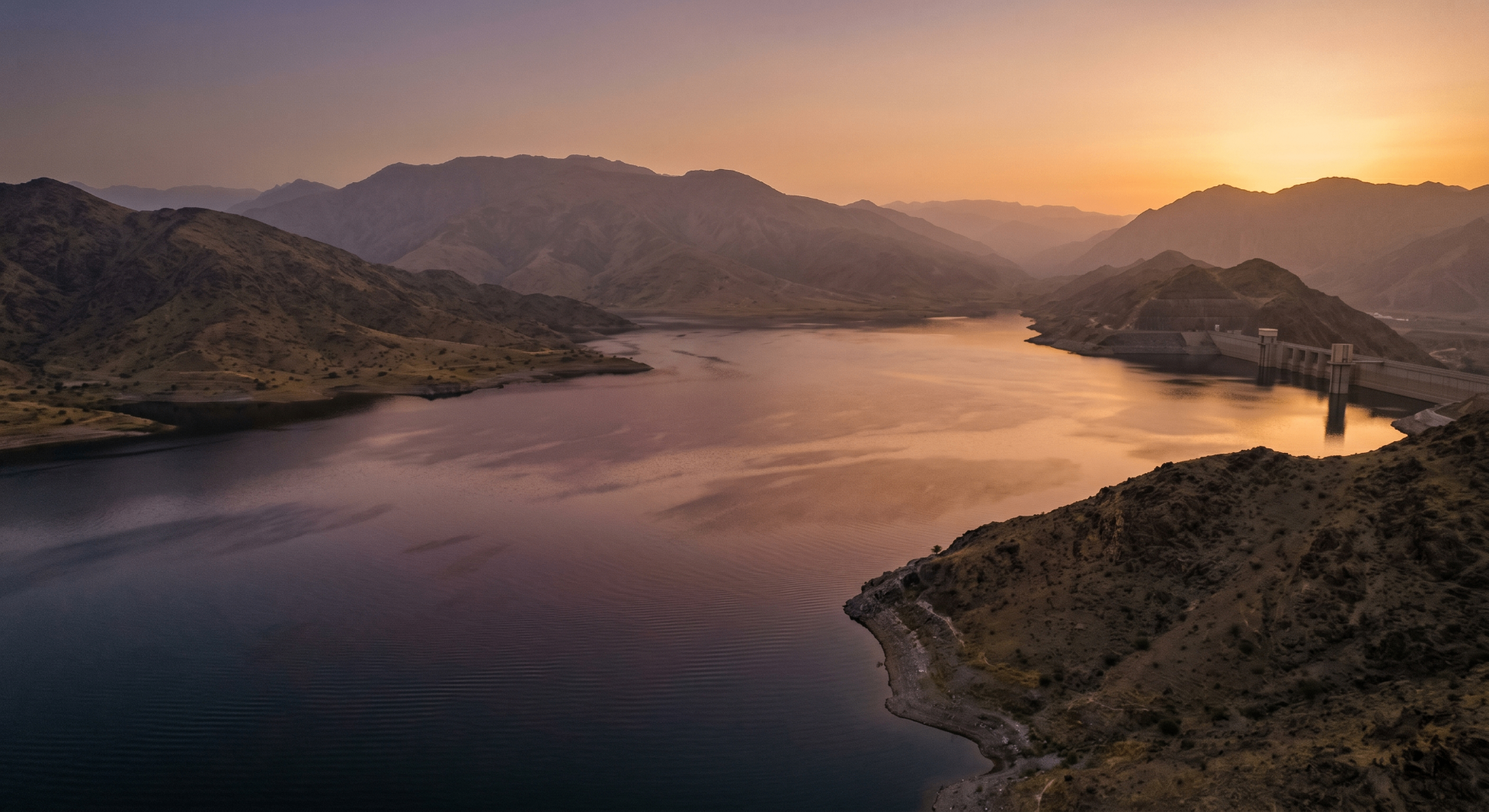
Reservoirs lose storage every year. We're building the autonomy to take it back.
NEEM Robotics combines AI and autonomous robotics to extract reservoir sediment with precision — engineered in Saudi Arabia, for the conditions that defined the problem.
Sediment is a reservoir's slowest, most expensive failure.
Saudi reservoirs lose over 1 percent of their storage capacity every year to sediment accumulation. The conventional response — large-scale hydraulic dredging — costs 5 to 15 dollars per cubic meter of dry sediment, mobilizes barges and bulk equipment, and disturbs the very water it's meant to protect.
Global reservoir average — higher in arid catchments
Conventional hydraulic dredging cost
Of the flow extracted in a typical dredge cycle

Reservoirs are long-term infrastructure. The way we protect them should be too.
To recover what reservoirs lose. We use AI and autonomous robotics to extract sediment with precision — protecting the water, energy, and storage capacity that arid nations depend on.
Saudi Arabia as the global reference for autonomous water infrastructure. The country that solved sediment, then exported the answer.
We don't excavate. We intercept.
Conventional dredging treats sediment as a bulk earthmoving problem. We treat it as a precision problem — solvable with intelligence and autonomy instead of force.
Mission planning, data-driven.
We use AI to understand where sediment accumulates, when it moves, and how reservoirs change over time. Operators get evidence-based decisions, not guesswork.
Robotics that do the work.
In-water robotic systems carry out the extraction without barges, cutter heads, or surface convoys. Operators set the objective; the system executes.
Engineered for Saudi conditions.
Built in the Kingdom for arid catchments, high-evaporation reservoirs, and the specific sediment regimes of the region. The problem is local. The engineering response is too.
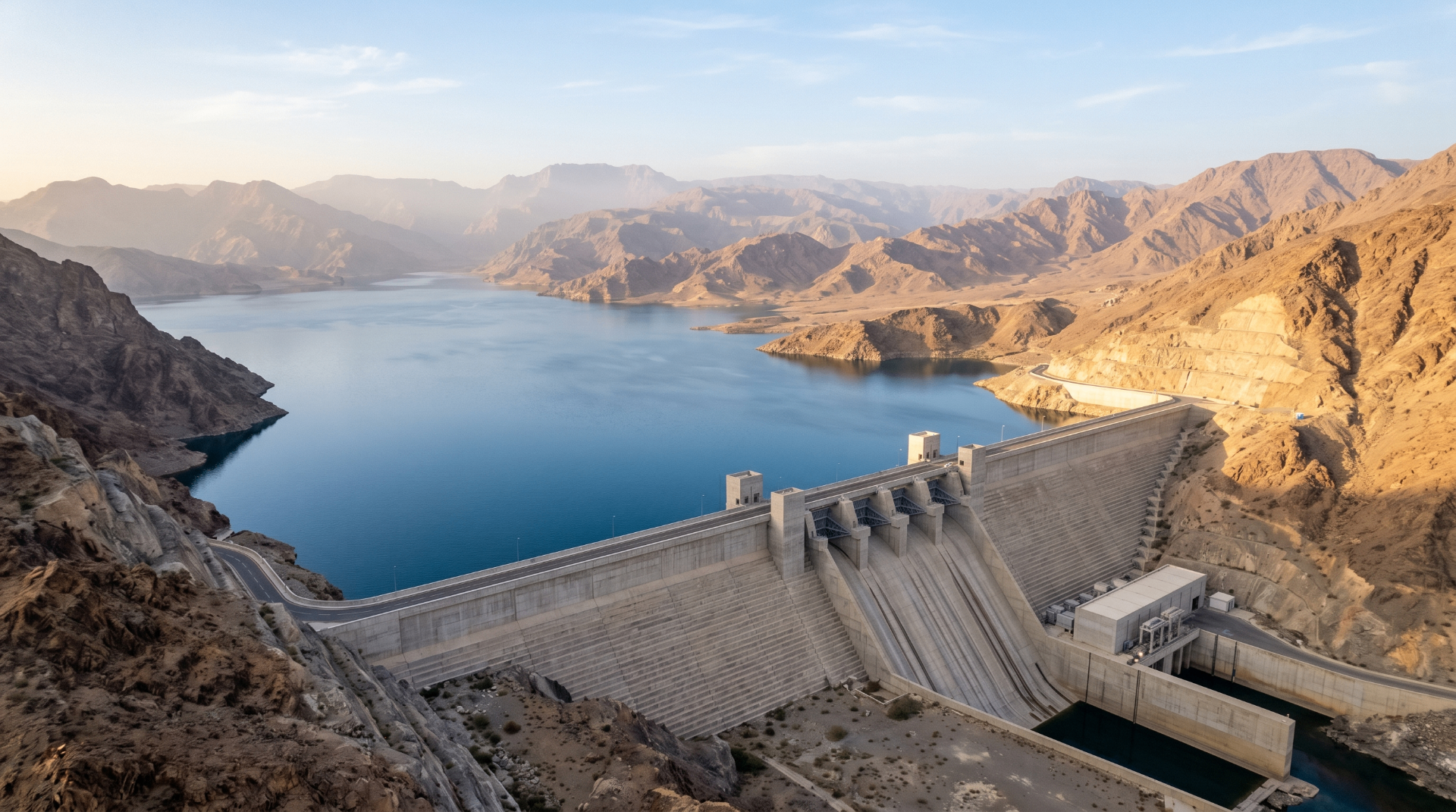
Saudi Arabia is rebuilding its water future. Reservoir capacity is part of the equation.
Vision 2030 commits the Kingdom to one of the most ambitious water resilience programs in the world. Reservoir storage is a quiet but critical variable inside that strategy — every percent of capacity lost to sediment is a percent of supply that has to be rebuilt somewhere else.
NEEM Robotics was founded to close that gap with autonomy and intelligence — in alignment with the National Water Strategy and the Saudi Water Innovation Center.
We're not building this alone.
SWIC Incubator
Selected by the Saudi Water Innovation Center to develop autonomous solutions for dam and reservoir sedimentation.
Vision 2030 · Water Security
Working in support of the Kingdom's National Water Strategy and broader water security objectives.
Pilot Host Reservoirs
Identifying candidate sites for a controlled Phase 2 field pilot. Reservoir operators welcome.
What's underway right now.
A 20-week stealth-stage roadmap from foundation to Series A readiness. Phase 01 is active; phases 02 through 05 are scheduled.
Three founders. One mission.
NEEM Robotics is led by three founders whose combined expertise spans the full stack of an autonomous marine system — from electronics and thermal-fluid engineering to AI-driven infrastructure reliability.
"NEEM exists because solving reservoir sediment requires three rare combinations of expertise — electronics from energy infrastructure, CFD-grade fluid mechanics, and AI for utility-scale systems — all under one roof, all engineered in-Kingdom."
Sultan Alqithami
Electronics Engineer at Saudi Aramco in Al Khobar, with industrial experience in mission-critical energy infrastructure. Leads NEEM's overall system architecture, sensor selection, and electronics design. Owns the company's intellectual-property strategy and serves as primary liaison with investors and partners.
Hassan Qaysi
Mechanical Engineering Honors Graduate (Second Class) from King Fahd University of Petroleum & Minerals (KFUPM), with a minor in Nuclear Power Engineering. SCE-accredited engineer and certified CFD expert in ANSYS. Leads NEEM's hardware design and simulation workflow — a structural in-house capability that allows the company to validate engineering concepts computationally before any physical fabrication.
Milbis Alqouzi
Engineering and OT Cybersecurity leader with 14+ years in mission-critical infrastructure, power generation, and desalination. Leads NEEM's AI-driven prediction systems and reliability engineering. Brings deep domain credibility to the water-utility customer base — the exact stakeholders NEEM serves.
We're selective about who we brief.
Briefings are technical, time-bounded, and held under NDA. We prioritize conversations where there's a path to meaningful collaboration.
Reservoir operators
With measurable sedimentation challenges and willingness to instrument a controlled trial.
Water authorities
Exploring autonomous infrastructure for reservoir maintenance and capacity protection.
Pre-seed and seed investors
Focused on Saudi deep-tech, water infrastructure, or autonomous systems.
Academic partners
In hydraulics, fluid mechanics, or marine robotics — particularly KFUPM and KAUST.
If your reservoir is losing storage, let's talk.
Briefings are 45 minutes, technical, and held under NDA. We're selectively engaging with reservoir operators, water authorities, and strategic partners.